Paediatric Therapeutic Development Workshops
We’re accelerating therapeutic development in childhood cancer by uniting global experts through a series of workshops to help us work smarter, not just harder, for the children who need it most.

Overview
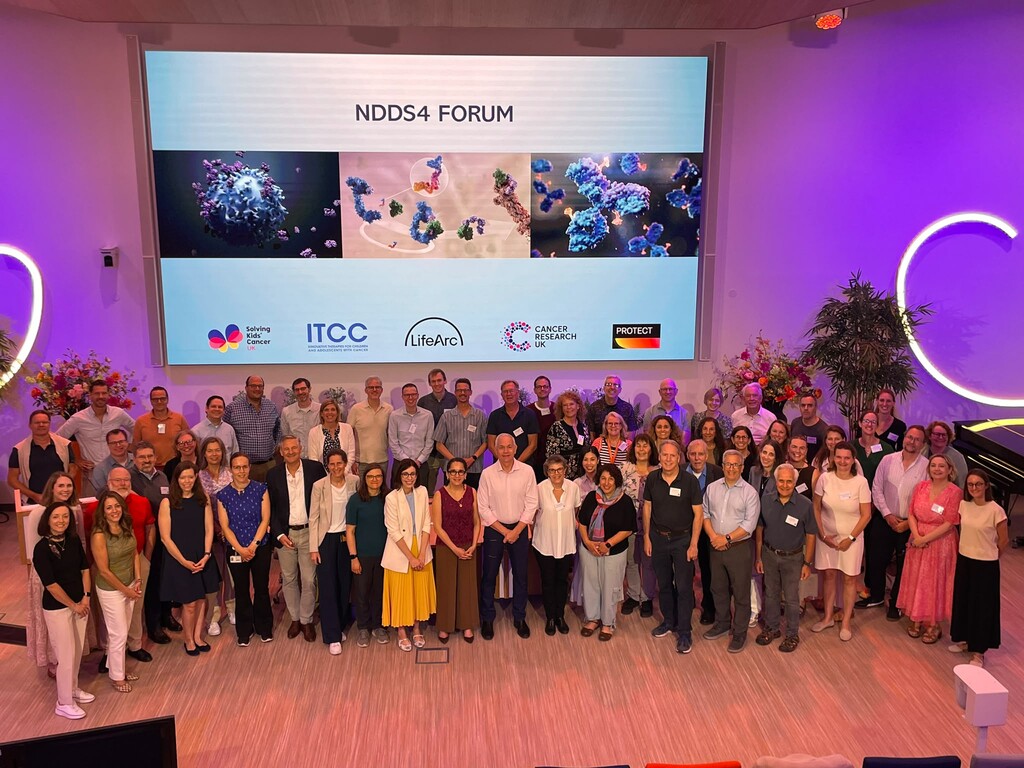
This programme, with the ITCC consortium, Cancer Research UK, Cancer Research Horizons and patient advocates from Cancer Grand Challenge Team PROTECT brings together clinicians, researchers and patient advocates to identify, prioritise and advance new treatment opportunities for the childhood cancers with the highest unmet need.
The cancer types have been identified and guided by an international survey of paediatric cancer experts to ensure we’re focusing on the areas where improved therapies could make the greatest difference.
About the Paediatric Therapeutic Development Workshops
The Paediatric Therapeutic Development Workshop (PTDW) series is designed to align research efforts behind the most promising therapeutic targets in childhood cancer. Each workshop supports the identification and prioritisation of high‑potential preclinical targets for each indication.
Workshops are co‑developed with a small panel of advising international experts in that cancer type. The format ensures robust, balanced discussion, including:
- Problem statement: clinicians and patient advocates share their perspectives of current practice and unmet needs.
- Targets for new treatments: experts review the strength of evidence for both novel drug targets and opportunities to tailor existing treatments to the unique needs of childhood cancers, identifying areas of focus that could support drug discovery efforts.
- Clinical opportunities: exploration of key clinical barriers and potential solutions, including drug access, delivery, and trial feasibility.
Workshop focuses
Our current work focuses on the cancer types below.
| Cancer indications | Date |
| Rhabdoid tumours | June 2024 |
| Medulloblastoma | October 2024 |
| Rhabdomyosarcoma | December 2024 |
| Osteosarcoma | February 2025 |
| Acute myeloid leukaemia | April 2025 |
| Desmoplastic small round cell tumours | June 2025 |
| High-grade glioma | September 2025 |
| Ewing sarcoma | November 2025 |
| Ependymoma | January 2026 |
| High-risk acute lymphoblastic leukaemia | March 2026 |
| Synovial sarcoma | May 2026 |
| Neuroblastoma | July 2026 |
Outputs of the workshops
Outputs from each workshop, including top therapeutic targets and key challenges to be addressed, will be shared in Nature’s British Journal of Cancer, to help researchers and funders drive progress in a streamlined way.
For top therapeutic targets identified, investigators can apply for support through initiatives like C-Further.
See outputs from the workshop on rhabdoid tumours
Rhabdoid tumours are rare cancers that mostly affect infants and young children. They are solid tumours that develop in the brain, kidney, liver or other soft tissues. Around 250-300 children across Europe and the US are diagnosed with rhabdoid tumours each year. Sadly, 2 in 3 children won’t live for more than five years after diagnosis. This needs to change.
Current treatment for rhabdoid tumours involves surgery, intensive chemotherapy and radiotherapy. Treatment causes substantial short- and long-term side-effects, including on brain development. There is an urgent need to develop more effective treatments to improve survival rates and reduce side-effects, so that these children have better long-term health.
The outcomes of this workshop can now be used by the research community and funders to help drive focused progress, together. The response to the workshop has also shown how much the community values this approach. We now believe there is appetite to build on this work moving forward, incorporating the innovative approaches and tools developed through these workshops.
See outputs from the workshop on rhabdomyosarcoma
At the end of 2024, a workshop was hosted on rhabdomyosarcoma – a type of soft tissue sarcoma. There is a major shortage of new drugs for rhabdomyosarcoma. The workshop focused on the main subtypes affecting children:
- Embryonal rhabdomyosarcoma (occurs mainly in young children)
- Alveolar rhabdomyosarcoma (occurs mainly in older children and teenagers)
See outputs from the workshop on medulloblastoma
At the end of 2024, a workshop was hosted on medulloblastoma – the second most common brain tumour in children. It develops at the back of the brain and is likely to grow quickly.
See outputs from the workshop on osteosarcoma
In 2025 a workshop was hosted on osteosarcoma – the most common type of bone cancer in children and young adults under 25, usually developing in bones of the leg or upper arm during growth spurts. They are thought to be caused when bone cells, or cells that are pre-programmed to become bone cells, develop genetic mistakes that cause them to grow and divide out of control.
How we prepare: Insights-driven workshops
Our Insights team conducts extensive preparation before each workshop, including:
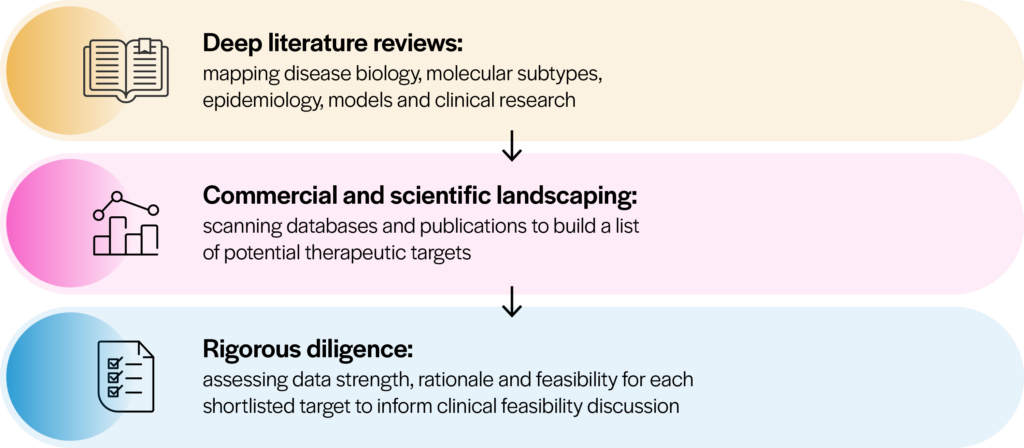
This process ensures that each workshop is grounded in evidence, aligned with community priorities and focused on accelerating real‑world impact.
About childhood cancer
Cancer is a leading cause of death for children and adolescents worldwide, and developing new treatments is uniquely challenging. These cancers are biologically distinct from adult cancers, often involving genes active in early development, which raises safety concerns when targeting them. Small patient populations and limited commercial incentives further complicate driving this research all the way to the clinic, and clinical trials themselves require international collaboration and innovative designs to overcome small numbers and fragmentation. These challenges mean that advancing new therapies for children demands a highly collaborative, bespoke approach across the research community.
Learn more about our partners supporting the workshops
Want to learn more about our work in childhood cancer?
Contact us
In submitting your personal data via this form, you consent to being contacted via the details provided so that your enquiry can be responded to. If you would like your data to be removed, please email dataprivacy@lifearc.org.
Please see our Privacy Policy in relation to the personal data you submit to us through this page.