Turning unmet need into focused action through our Paediatric Therapeutic Development Workshop series.
Over the past two years, we’ve held 12 workshops for 12 childhood cancers with high unmet therapeutic needs – bringing together the best expertise with the best evidence to map a clear path towards improved treatments. In areas where data, expertise and resources are limited and can be distributed across different groups and geographies, convening is no easy task.
From scope and design to participant selection, due diligence and follow-up, we’re sharing what we did and what we learned. We hope that this approach can become a repeatable model for other conditions with high unmet need.
The childhood cancer challenge and our workshop format
For many children and young people with cancer, treatment options have not changed enough. While targeted approaches have transformed treatment in many adult cancers, too many paediatric cancers still rely on combinations of chemotherapy, radiotherapy and surgery that have been used for decades. These treatments can save lives, but they are often not bespoke to the unique biology of childhood cancers or the specific needs of children and young adults. This can leave survivors with serious long-term side effects.
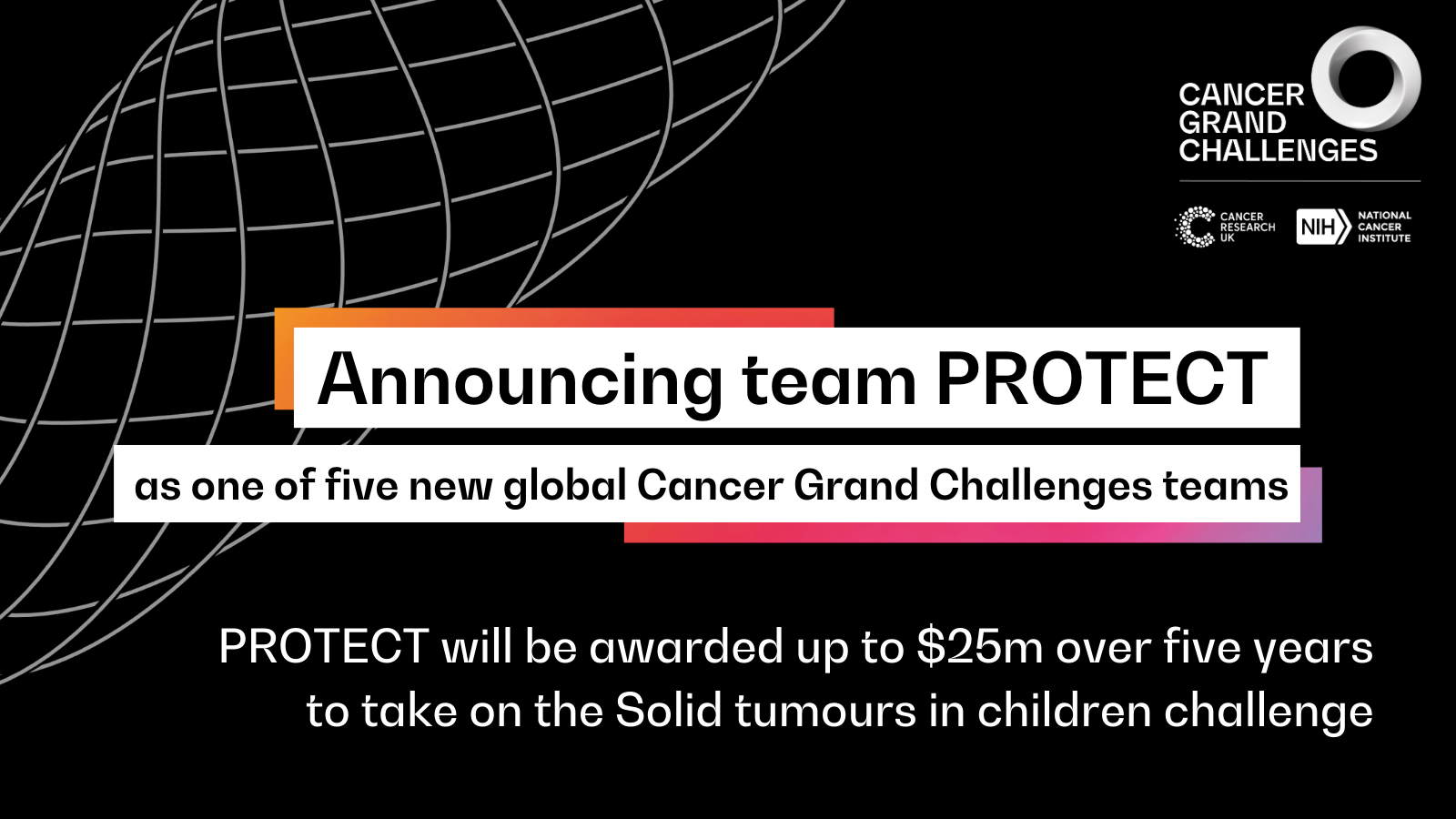
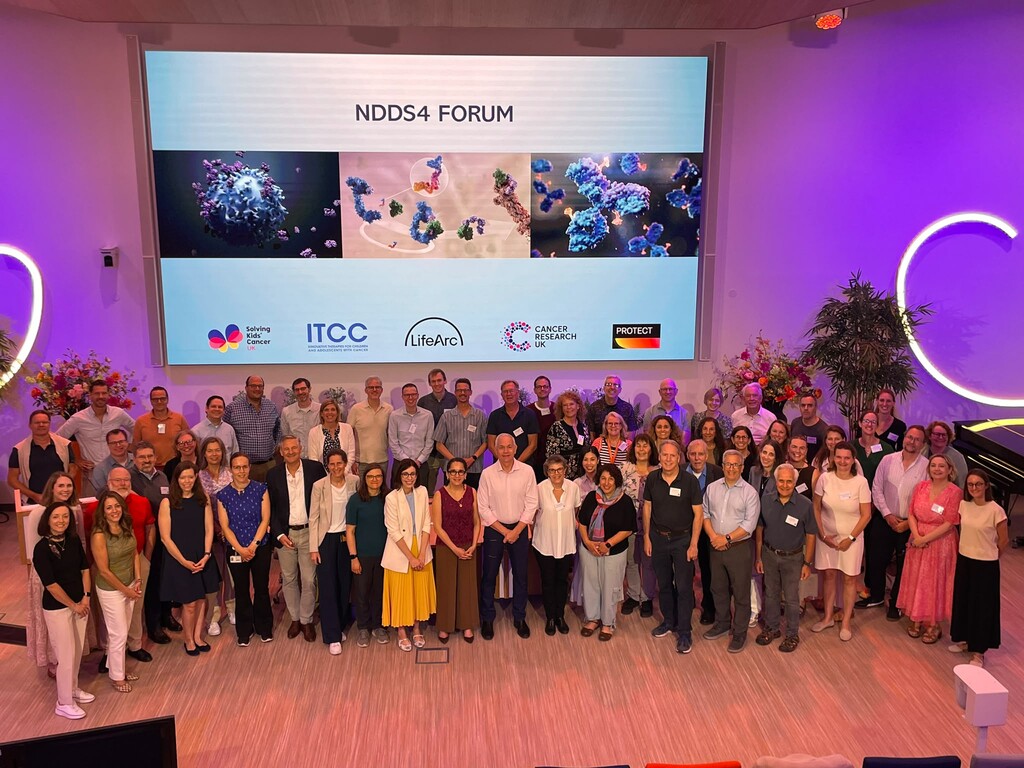
The challenge is to not simply rely on moving adult cancer drugs into younger populations. Childhood cancers are biologically distinct, patient populations are small, clinical testing is more complex, and commercial incentives can be weaker. If we want better treatments with fewer side effects, we need approaches designed around the realities of paediatric disease and the patients themselves. This was the driving force behind our Paediatric Therapeutic Development Workshop (PTDW) series, in collaboration with Innovative Therapies for Children and Adolescents with Cancer (ITCC), Cancer Research UK, Cancer Research Horizons and patient advocates from PROTECT.
Each PTDW united clinicians, translational researchers, experts in biology and patient advocates to review the most promising drug targets and treatment opportunities for a specific childhood cancer indication. Workshops followed a structured format:
- Problem statement: clinicians and patient advocates share their perspectives of current practice and unmet needs.
- Targets for new treatments: experts review the strength of evidence for both new drug targets and opportunities to tailor existing treatments to the unique needs of childhood cancers, identifying focus areas that could support drug discovery efforts.
- Clinical opportunities: exploration of key clinical barriers and potential solutions, including drug access, delivery, and trial feasibility and prioritisation of existing drugs.
Lesson 1: Start with unmet need, without preconceptions
When considering how to improve treatment approaches, one of the most important design choices was to begin with unmet need rather than starting with preferred drug targets or technologies. Before the workshops began, early work focused on identifying the highest-priority disease areas to address.
Unmet needs of a disease are not always obvious from a surface-level view. Some diseases may have relatively positive overall outcomes, but still contain sizeable, well-defined patient subgroups that respond poorly to existing treatments. Acute lymphoblastic leukaemia (ALL) is one example of this.
A practical lesson we learnt from this is to engage with the community early and carefully define the problem you’re trying to solve. A workshop that starts with ‘Which target is the most druggable?’ risks narrowing the conversation too soon. A workshop that starts with ‘Where is the unmet need? What is already known? And what decision are we trying to make?’ is more likely to identify the barriers that truly limit progress and produce recommendations that can shape future treatment development.
Lesson 2: A structured discussion is a productive discussion
Once the unmet need had been defined, the next challenge was designing a workshop that could generate useful outputs rather than simply interesting discussion. Each PTDW followed a common structure designed to move participants from understanding the problem to identifying practical opportunities for action.
We found that discussions on potential drug targets worked best when they moved from the problem statement, through the evidence base, to the key clinical and translational questions that would determine whether an opportunity should be prioritised.
Discussions on clinical opportunities were often more dependent on the specific challenges of each cancer indication, but the principle remained the same: the clearer the decision-making framework, the more actionable the outputs. Following this format meant we were able to get clear recommendations, defined follow-up actions and the right people to help take them forward.
Lesson 3: Get the right people in the room and be ready to facilitate
The value of a workshop depends less on the number of people invited than on whether the right perspectives are represented. To get the most out of each workshop, we held preparatory discussions with a small group of advisers who helped identify the wider group of experts and patient advocates best placed to contribute to the workshop. Based on the nature of the scientific discussions, we aimed for a 2:1 balance between translational/biology and clinical researchers. Geographical representation was also important. Most workshops drew heavily on expertise from Europe and North America, with some involving contributors from Australia, Japan and South America.
Involving patient advocates and those with lived experience was essential. Researchers and clinicians may not always have a full view of how families think about risk tolerance, trial design or the urgency of progress in areas where options remain limited. Bringing those perspectives into the core discussion helps keep prioritisation grounded in what really matters: whether these decisions could make a meaningful difference for children and families.
Industry representation was deliberately handled differently. To create an environment where preliminary or unpublished data could be discussed openly, companies were not part of the main workshop conversations. However, industry partners were expected to become involved in follow-on discussions and activities where specific development opportunities emerged.
We deliberately designed the workshops to be interactive, encouraging questions and contributions from all participants. An effective chair was essential: someone respected by attendees, familiar with the field, able to involve quieter voices and willing to redirect discussion back to the central questions. We were fortunate enough to have the expertise of Prof. Andy Pearson, LifeArc’s Chair of Childhood Cancer.
The most useful insights often emerged at the intersection of disciplines. A drug target may look biologically promising but could be under-researched or lack a realistic development path. A clinical opportunity may be attractive but depend on unresolved translational questions. A trial concept may be scientifically elegant but difficult for families to engage with or for clinicians to deliver. Bringing these different perspectives together helps expose those tensions early, when they can still influence priorities and shape better decisions.
Lesson 4: Preparation is the engine of the workshop
The most visible part of a workshop is the discussion itself, but most of the work happens before anyone joins the meeting. Our Insights team performed rigorous reviews of the published literature and commercial databases to build a detailed overview of each cancer type (including molecular subtypes, epidemiology, clinical features, disease biology, immunotherapy and the pipeline of therapeutic targets, drugs and clinical trials).
We shared this material with attendees in advance, giving them time to review the evidence and create a common foundation from which the discussion could begin. To ensure patient advocates felt confident contributing to workshop discussions, we offered additional meetings to discuss the scientific background and explore areas in more detail.
In parallel, expert input was used to select up to 6 potential drug targets for in-depth review at the workshop. In some instances, we contacted key opinion leaders to understand whether important, unpublished developments should be discussed during the workshop. A published, standardised scoring approach was used to objectively assess the strength of evidence supporting each target, while still allowing room for expert judgement. The criteria included:
- biological rationale
- strength of validation data
- tractability
- tolerability
- feasibility
- availability of appropriate therapeutic starting points
Preparation builds trust, credibility and improves engagement in the meeting itself. Experts are more willing to contribute if they can see that the organisers have done the work to understand the field and bring together the right people. This upfront work meant valuable workshop time was spent making the decisions that mattered, rather than establishing the basics.
Lesson 5: Prioritisation is as much about exclusion as selection
A productive workshop is not one where everyone immediately agrees. In translational research, disagreement and uncertainty are often the most useful parts of the conversation. They reveal where assumptions differ, where evidence is fragile, and where further work could have the greatest impact.
One of the aims of the workshops was to identify gaps that could be closed through additional experiments or data. Data strength does not necessarily mean a complete package ready for clinical translation. Higher-priority targets might have a clear biological rationale in a well-defined patient population, evidence that a treatment approach could be tolerable and robust validation in relevant preclinical models.
Equally, targets may be deprioritised because appropriate treatments already exist, tolerability concerns are too great, or because the evidence gaps are too large and not easily addressed. Deprioritisation is just as important as prioritisation, because knowing where effort is unlikely to be productive helps ensure limited resources are used effectively. A good prioritisation exercise should therefore clarify both what should be advanced and what needs to be resolved.
Lesson 6: Know how to handle unpublished and sensitive information
Handling unpublished or sensitive information requires careful balance. The workshops encouraged open discussion in the spirit of collaboration, while making clear that individuals would retain control over what could be shared publicly afterwards.
The meetings themselves were not run under confidential disclosure agreements, which would have been logistically challenging at this scale, but there was the option for separate confidential discussions where necessary. For a public-facing output such as a consensus manuscript, the principle was clear: preliminary information can inform understanding and follow-up, but nothing sensitive should be disclosed without permission.
Lesson 7: Consensus can evolve
We know that consensus is not a fixed endpoint and must remain open to revision as the field progresses. That’s why we focused not only on the recommendations themselves, but also on making the reasoning behind them explicit.
This created a transparent record of why certain opportunities were prioritised over others, allowing the wider community to ask: Can this be solved? Who is best placed to solve it? What evidence would change our view? As new data, technologies and clinical insights emerge, those decisions can be revisited and challenged. A useful workshop does not close a conversation. It creates a stronger starting point for the next one.
After the workshop: Turning priorities into action
The most important question after any workshop is: ‘What happens next?’ The real value comes from doing the work that the discussion identifies and recognising where others are better placed to lead. For the PTDW series, outputs include consensus manuscripts, lay summaries, action trackers, follow-up conversations, funding ideas, target validation plans and strategic decisions about where LifeArc and partners can add value.
At LifeArc, we’re now reviewing recommendations across the series to understand what has changed, what needs renewed focus and what overarching themes are emerging. Some recommendations have already informed internal programmes, including C-Further applications and expressions of interest to our Rare Disease Clinical Trials Programme. Externally, the workshops also provide a basis for endorsing complementary funding applications and initiatives where they align with community priorities.
The series should therefore be viewed as a foundation rather than a conclusion. It has created a structured evidence base, a set of community-informed recommendations, and a network of people and organisations that can help turn priorities into action.
Our broader message for anyone planning similar work is this: convening is most powerful when it is purposeful. Start with unmet need. Prepare rigorously. Bring the right people together. Move through the evidence base. Emphasise that the opinion of all participants are equal. Make space for uncertainty and disagreement. Capture the recommendations clearly. Then do the difficult follow-up work. In high-unmet-need fields, where resources are limited and progress can feel slow, well-designed workshops can help communities move from shared concern to shared action.
A model for other areas of unmet need
While the PTDW series was developed for childhood cancer, our hope is that our approach can be applied to other conditions. Many rare diseases and high-unmet-need conditions face similar challenges: small patient populations, limited data, dispersed expertise, constrained funding and uncertain development pathways. In these settings, the problem is not always a lack of science. Sometimes the bottleneck is the ability to prioritise where limited time, money and expertise should be directed.
You can learn more about the Paediatric Therapeutic Development Workshops and read the journal publications and lay summaries here: https://www.lifearc.org/project/paediatric-therapeutic-development-workshops/
About the author
Joe Baxter
Senior Analyst, Insights