Gates Foundation: a $5 million partnership to make monoclonal antibodies more accessible
We have partnered with the Gates Foundation and awarded more than $5 million to seven pioneering projects aimed at lowering the cost and enhancing the scale of producing monoclonal antibody (mAb) treatments.
Overview
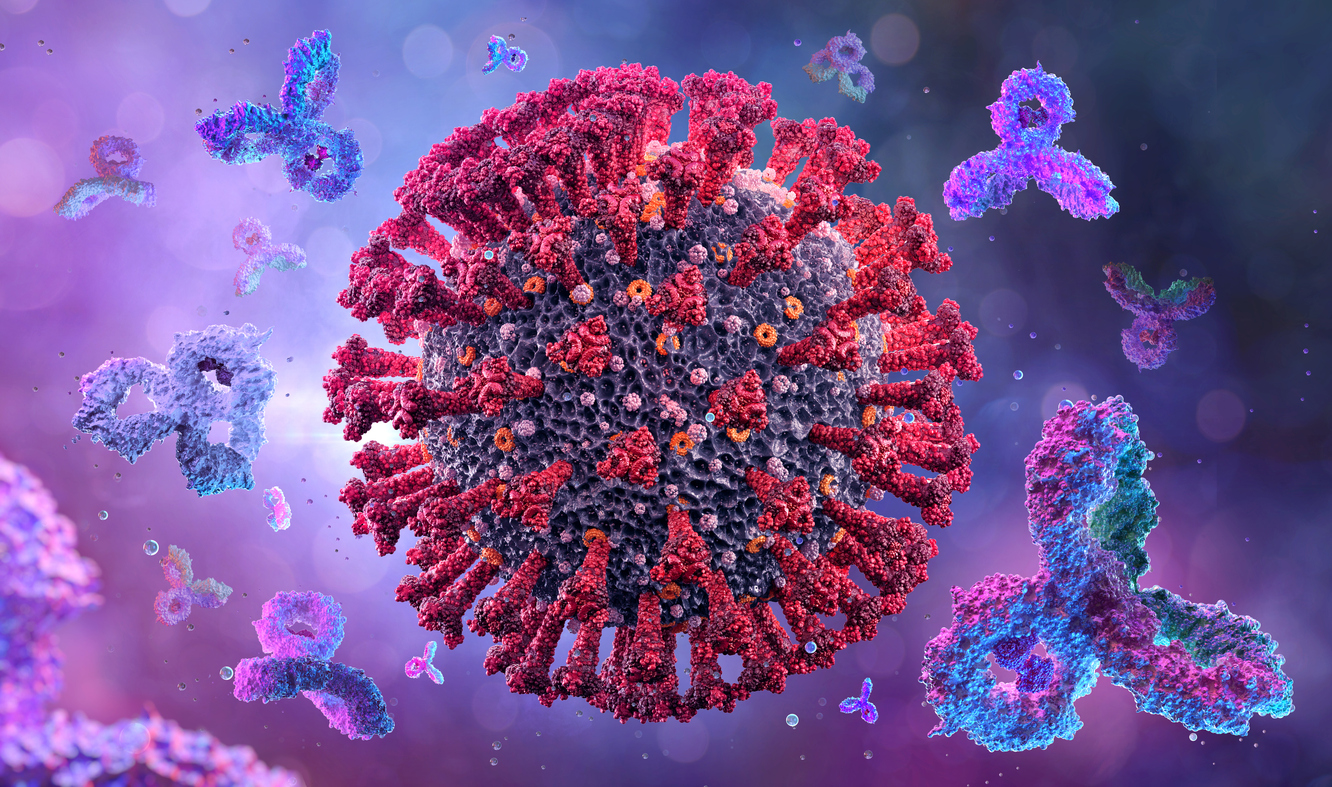
mAbs are powerful tools that can be used to treat, prevent, and detect a broad spectrum of diseases, but high production costs and supply chain limitations mean billions of people around the world are unable to access them, especially in low-resource settings. This partnership tackles some of the key drivers of manufacturing costs and aims to make mAbs more globally affordable and accessible.
Projects funded by us ($2.3 million):
Self-scaling Continuous Recovery for Exceptionally low-cost antibodies (SCoRe)
Led by Professor Chris Love and Dr Hadley Sikes, Massachusetts Institute of Technology
This project aims to create a continuous flow platform for scalable mAb recovery, while also replacing expensive resin-based chromatography with engineered binding agents and membrane technologies. If successful, this would enable large amounts of antibodies to be produced on small, local sites.
Self-purifying antibodies by Phase separation
Led by Professor Ashutosh Chilkoti, Duke University
The most common method of purifying antibodies is through chromatography, which is expensive and slow. This project will pioneer a low-cost, high-throughput technology using engineered fusion proteins together with elastin-like polypeptides, replacing chromatography and reducing timelines and costs by up to 90 per cent.
Tric-mAbs
Led by Dr Antti Aalto, VTT Technical Research Centre of Finland
This project aims to use cells from the filamentous fungus, Trichoderma reesei, to produce therapeutic mAbs. Current approaches use mammalian cells which are expensive to grow and inefficient at producing antibodies – this strategy could produce more mAbs in less time, and at a lower cost.
Projects funded by the Gates Foundation ($3 million):
Demonstration of low-cost monoclonal antibody manufacturing
Led by Anurag Rathore, Foundation for Innovation and Technology Transfer (Indian Institute of Technology Delhi)
This project will pilot a continuous processing platform for mAb production, building on IIT Delhi’s existing system to demonstrate scalability to commercial settings. It aims to validate reduced costs and increased yields compared to batch processing, generating technical and economic data to support affordable antibody manufacturing in low- and middle-income countries.
Fungal C1 fermentation and peptide-nanofiber Capture for low-cost MAM01 antibodies
Led by Michael Betenbaugh and Honggang Cui, Johns Hopkins University
This project will develop a low-cost biomanufacturing platform for the antimalarial antibody MAM01 by combining a fungal expression system with nanofiber-bound peptide purification. In collaboration with Dyadic International and Thermo Fisher Scientific, the team will optimise fermentation, purification, and recycling processes to improve yield, reduce costs, and demonstrate scalable antibody production.
Low-cost all-membrane process to purify MAM01 antibodies from C1 cell lines
Led by Cristiana Boi and Ruben Carbonell, North Carolina State University
This project will develop an all-membrane chromatography system using low-cost, single-use membranes to purify the antimalarial antibody MAM01 produced in the fungal C1 expression system. In collaboration with Dyadic International, the team will optimise membrane design, purification conditions, and scalability to create an integrated, affordable biomanufacturing platform.
Synechococcus cyanobacteria as a novel monoclonal antibody production host
Led by James Brown, Bondi Bio, and Jake Baum, UNSW Sydney
This project will develop a low-cost platform for producing the antimalarial antibody MAM01 using the photosynthetic cyanobacterium Synechococcus. The team will engineer and optimise the strain for expression, purification, and proper antibody assembly, then use the results to design a scalable facility and economic model for cyanobacterial antibody manufacturing.
About monoclonal antibodies (mAbs)
mAbs offer highly specific, targeted treatments with immense potential to prevent and treat infectious diseases safely and precisely. Unlike antibiotics, mAb products may be less prone to developing drug resistance, can provide immediate protection, and have faster development timelines – making them especially valuable in areas where antibiotic resistance is a growing concern, and in situations where vaccines are unavailable or ineffective.
Despite their huge potential as a public health tool, mAbs remain largely inaccessible in low-resource settings as manufacturing costs range from $50–100 per gram. To be viable in low-resource settings, costs of mAbs for infectious disease need to be driven down to around $10 per gram to achieve global health “vaccine-like” pricing.