Our impact
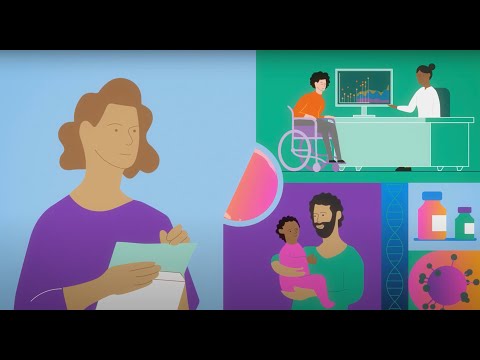
At the core of LifeArc is our desire to leave a positive impact for patients and the world.
Measuring how we create impact is multi-layered and complex. Our contributions are often focused on early-stage research – these discoveries can take a decade or more to reach patients; some of them don’t make it past later phases of development at all.
We’re trying to understand how we contribute to change. In turn, we hope this will allow us to better track, evaluate and maximise our future impact.
Our impact framework and areas of impact
Patient voice is at the heart of all our activities – involving patients in decisions related to managing their condition is vital to improving early diagnosis and the treatment of complex health needs.
Our ultimate goal is to improve the quality of life and outcomes for patients. With that impact for patients in mind, we’ve identified 6 areas of impact – these will also provide early indicators on route to that success.
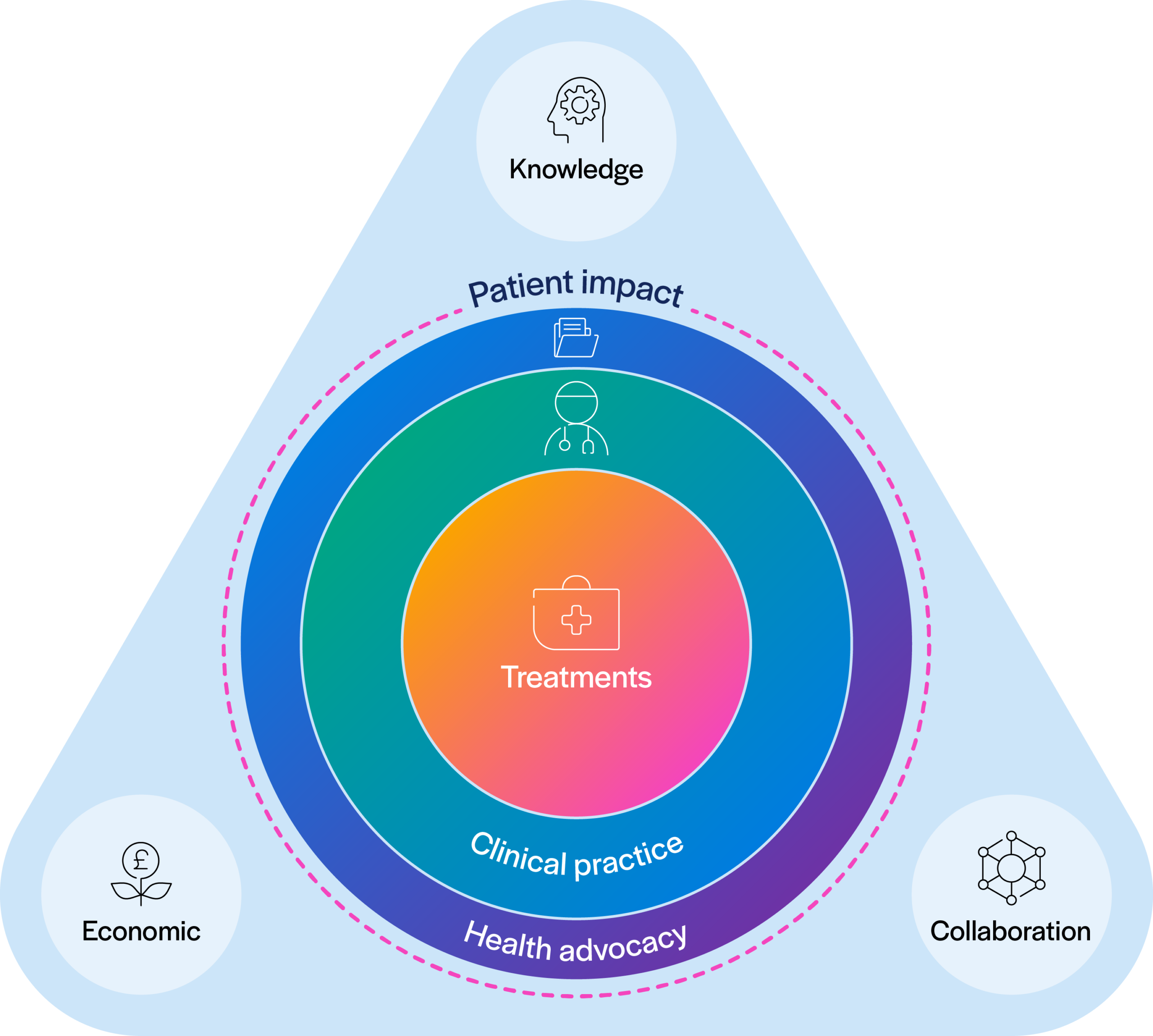
Our goal is to achieve patient impact across three key impact domains:
Treatments
We contribute to the development of drugs and devices that can effectively treat, prevent, or help manage a patient’s condition/disease to lessen the impact on their lives.
Clinical practice
We work towards predictive diagnosis, management or treatment for people living with a condition/disease through better clinical practice informed by clinical data and/or the use of devices, digital or diagnostic tools.
Health advocacy
We shape policy and advocate for patients, shaping decisions in health, science, tech, data, and innovation to enable research and development (R&D), clinical trials, market access, and retention for rare disease treatments.
The above impact domains are supported by three enabling impact domains:
Knowledge
We generate vital translational knowledge, intellectual property/technology understanding, patient insights to drive an informed approach with patients at the centre.
Collaboration
We engage a wide range of stakeholders across the life sciences ecosystem to accelerate the identification, development and uptake of therapeutics, diagnostics, devices, and data solutions for patients.
Economic
We enable the progression of solutions for patients through investment and business support on intellectual property and other related issues.
How we developed this approach to evaluating impact
We used a theory of change – widely used in the charity, development, research and health sectors, especially in relation to complex programmes. It’s a model of what a complex programme of activity is expected to achieve.
You can use a theory of change as a tool:
- to build shared understanding internally and externally
- to help you communicate your vision and plans
- to plan for new work and/or areas
- to help you prioritise and guide existing work
- to help you to monitor, evaluate, learn and improve

Interested in using theory of change to add impact to your work?
We created a guide to theory of change to get you started.
Latest news
-

Multimillion-pound partnership breaks down barriers in MND research
-

Could an existing antibiotic be used to treat rare liver disease?
-
Celebrating 2 years of the network driving innovation for people with CF