For Childhood Cancer Awareness Month, we reflected on some of the challenges and opportunities in childhood cancer research. Here, David Jenkinson, our Head of Childhood Cancer, explores the transformative potential of CAR T-cell therapy, highlighting the importance of adopting innovative approaches to unlock its full potential and bring life-changing advances to children, faster.
In 2024, we shared our new childhood cancer research strategy, aiming to accelerate the process by which new innovations reach the children who need them.
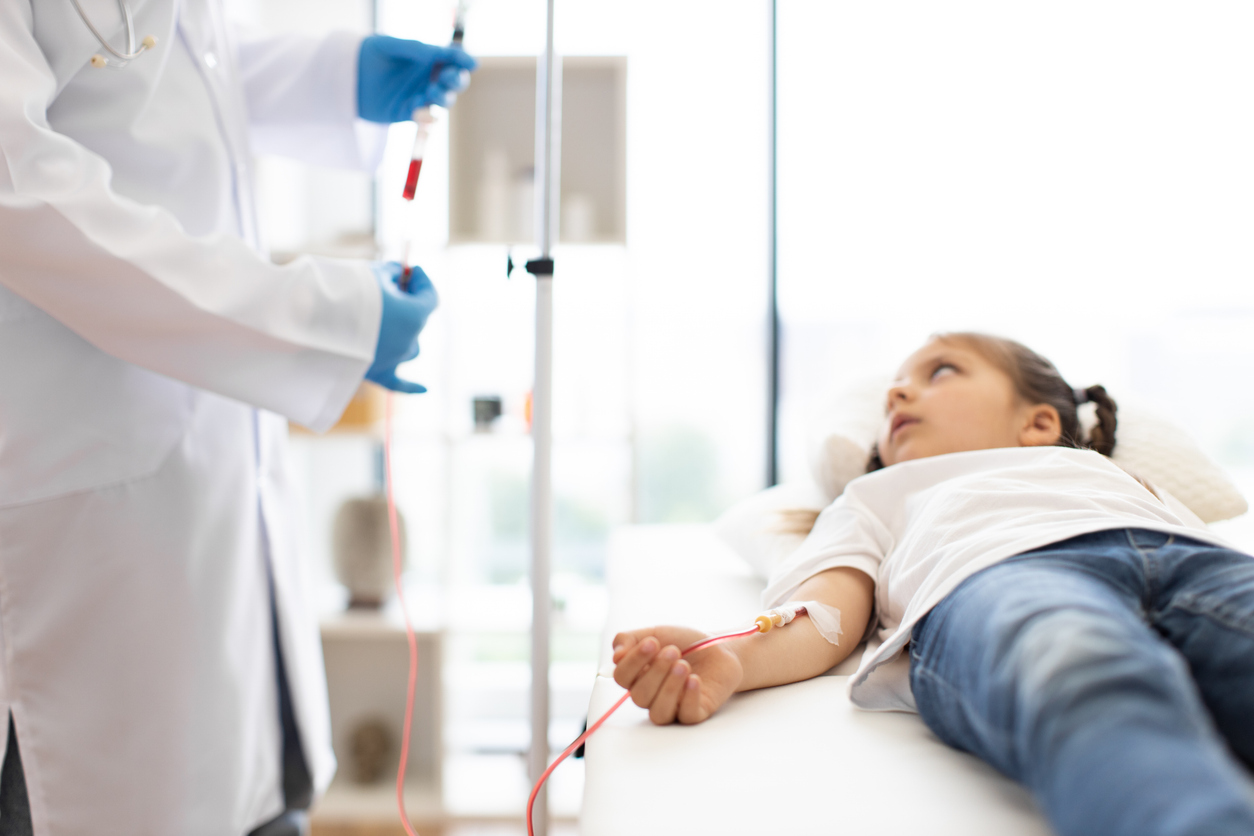
There’s real excitement about the potential of CAR T-cells as a treatment. This specialised form of immunotherapy takes a patient’s own infection-fighting white blood cells – T-cells – and trains them to recognise and kill cancer cells. First, they’re collected from the patient’s blood. Next, they’re genetically modified in the lab with chimeric antigen receptors (CARs), equipping them with the ability to recognise and target specific proteins on the surface of cancer cells, which can differ between cancer types. Once in the body, CAR T-cells recognise and kill cancer cells – providing a highly precise treatment that aims to minimise the off-target impact on non-cancerous cells wherever possible.
CAR T-cell therapy is already delivering potent responses in some adult cancers and, increasingly, some childhood blood cancers, but we’re yet to witness the same success for solid childhood cancers. Many factors pose significant barriers to progress, including the unique genetics of childhood tumours and the immediate area surrounding a tumour that protects cancer cells from the immune system.
Incredibly, though, the research community is starting to find ways to break through these barriers. In early clinical trials, CAR T-cells that target a molecule called GD2 has led to promising clinical results, including shrinking some very hard-to-treat childhood cancers, such as glioma and high-risk neuroblastoma.
We’re now on the brink of these CAR T-cells entering pivotal Phase II trials, which could provide much-needed hope for children whose cancer has come back or is otherwise very hard to treat. To get these treatments closer to the children who need them, there’s one piece of the puzzle we still need to crack: how we collaborate.
Going faster and further, together
There’s the old saying, “if you want to go fast, go alone. If you want to go far, go together.”
Maybe it’s wishful thinking, but when it comes to bringing promising CAR T-cell therapies to children with cancer, we need to do both – we need to go all the way, and we need to get there quickly.
Thankfully, the childhood cancer research community has historically demonstrated a real readiness to work together. But like any field, we still have challenges of duplication, with groups working independently on the same targets, sometimes with very similar therapeutic strategies.
Let’s take a hypothetical situation: 4 groups working independently bring 4 similar CAR T-cell therapies through to a Phase I trial, each with 30 patients. Following this, they make iterations for efficacy, safety and regional regulations, each step bringing its own delays; maybe the groups each test the refined therapy on 30 more patients. We’ve suddenly reached 240 children receiving similar experimental treatments.
This isn’t an entirely made-up scenario. Duplicative efforts often drive fragmented trials and can, eventually, lead to the approval of similar drugs across different regions. For example, in the USA, children with high-risk neuroblastoma receive dinutuximab or naxitamab as part of multimodal treatment; in Europe, they primarily receive the biosimilar dinutuximab beta, with a different infusion regimen.
Besides the wasted resources and inefficiencies, this outcome, with standard of care differing between continents, makes it difficult to perform future robust international studies.
The fault doesn’t lie with the research groups, who are deeply motivated to develop therapeutics for childhood cancer, but the system in which we operate. As researchers, we’re often incentivised to go alone and fast, to push along behind closed doors, to be the first to publish our findings.
It takes a long time for a new treatment to reach the clinic – the point where a doctor can prescribe a new drug, a patient can receive it, and we can say our work is having a tangible impact in the real world.
If incentives were switched to prioritise working together, would the path to reaching this point look any different? For CAR T-cells and other emerging therapies, could we go further and faster?
Creating momentum for change
In April, we convened a summit to explore what needs to happen to maintain the rapid development of CAR T-cell therapies for solid childhood cancers. What we heard is that there are a number of questions that need answering, including determining how long CAR T-cells should remain active for in the body, and the optimal design to achieve a sustained anti-tumour response while minimising latent effects for patients.
But a resounding theme was also the need for collaboration. This includes adopting a fail-fast mindset, where negative results are shared across the community so we can all learn together. There was a view that there needs to be oversight of all CAR T-cell therapies under development, to ensure trials are aligned and reduce the risk of fragmentation, as in our scenario above. This is key for ensuring trials are as efficient as possible for children taking part, and that we determine the best treatment as quickly as possible for the children who will follow.
While this sounds sensible on paper, we can’t assume it will happen organically; the system is currently set up to reward competition. We need to consider how to implement drivers of collaboration to ensure academics don’t lose out on high impact publications that are so vital for their careers, and so that all contributors can share successes.
Importantly, we need incentives that move us away from testing and learning alone, to working in parallel, making new iterations of therapies together, to bring the best possible products through to those who need it.
It’s taken 15 or so years for anti-GD2 CAR T-cells to reach a Phase II trial. With the right drivers for collaboration, it’s exciting to imagine where, and how quickly, this treatment could go.
Looking ahead to the next 15 years, if we can shift the way this research is carried out, we could really change the future of children’s cancer treatment. We could grasp the potential of CAR T-cell therapy and see more therapies treating children in clinics, without the long-term effects we see with other drugs. And we might even be able to cure children with relapsed or refractory disease.
It’s never going to be a walk in the park. But ultimately, if we’re going to improve things for the children and families facing a cancer diagnosis, we have to make changes to the way we work. We must embrace new innovations and ways of working and find new ways to bring them to the clinic, as quickly as possible. We have to stay focused on the people we’re doing this for.
About the author

David Jenkinson
Head of Childhood Cancer