18-24 November is World AMR Awareness Week, a global campaign to raise awareness of antimicrobial resistance (AMR). The theme for 2026 is ‘One Health, One Action: Prevent AMR Now’, calling on everyone to do their part. Throughout the week, we will be highlighting how we, at LifeArc, are playing our part in addressing this complex global health challenge.
No organisation, country or sector can address antimicrobial resistance (AMR) alone. Resistant infections are driven by interconnected scientific, healthcare, social, environmental, and economic factors, making AMR one of the defining systems challenges of our time.
Driving meaningful progress will depend not only on developing new diagnostics, treatments and prevention tools, but also on ensuring that health systems can adopt them, healthcare professionals can use them appropriately, and patients can access them when they need them. This requires collaborations across disciplines, sectors and geographies.
At LifeArc, we work with partners across the global health ecosystem to help translate innovation into impact. Through our programmes and activities, we support the development, adoption and sustainable use of innovations that can help address infectious diseases and AMR. Together, these activities contribute to global efforts to improve access, strengthen health systems, support antimicrobial stewardship and accelerate innovation where it is needed most.
Strengthening the ecosystem from the ground up
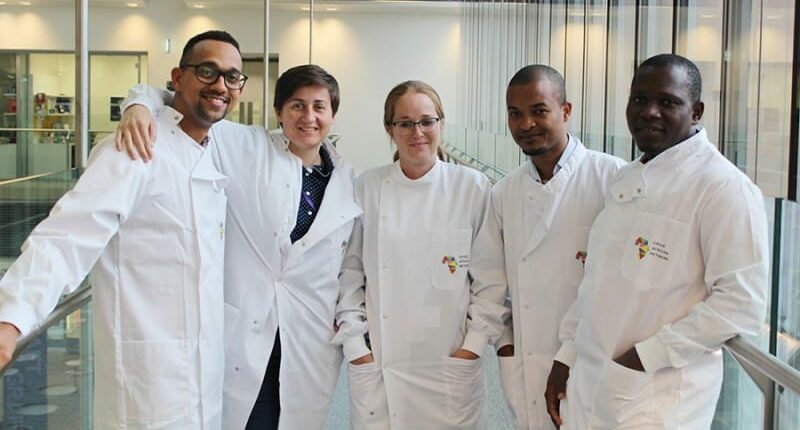
At the heart of a strong ecosystem for AMR are the people – those who work on the front line in laboratories, clinics and local communities. Resource-constrained countries often bear the greatest burden of global health threats like AMR, yet their scientists, who are best placed to ask and answer the right research questions, often lack the resources and connections to do so. LifeArc is helping address this challenge through support for the Crick Africa Network (CAN) in collaboration with the Francis Crick Institute and five research institutions in Africa. The network empowers scientists to tackle unmet medical needs in their own communities, offering fellowships for post-doctoral researchers to develop their research in infectious diseases and build their careers as independent investigators and technical experts on the African continent.
Alongside support for individual researchers, investment in local capability and infrastructure is also vital. LifeArc and the Gates Foundation are supporting five drug discovery projects in African institutions as part of the Grand Challenges African Drug Discovery Accelerator (GC ADDA) programme. One of these is the Pan-Africa DMPK Center of Excellence, based at the African Institute of Biomedical Science and Technology in Zimbabwe. It aims to increase access to capabilities in drug metabolism and pharmacokinetics (DMPK) – the study of how medicines are processed in the body. The centre tests potential new medicines from institutions across Africa, while also providing training opportunities and expertise. By supporting scientific infrastructure, skills and collaborations, the centre is helping to create a more connected and resilient drug discovery ecosystem for African scientists.
Partnership as a strategic necessity
Building a stronger AMR ecosystem requires organisations with different expertise, perspectives and capabilities to work together. LifeArc collaborates with partners across the field, including the European Society of Clinical Microbiology and Infectious Diseases (ESCMID), Global Antibiotic Research & Development Partnership (GARDP), Combating Antibiotic-Resistant Bacteria Biopharmaceutical Accelerator (CARB-X) among others.
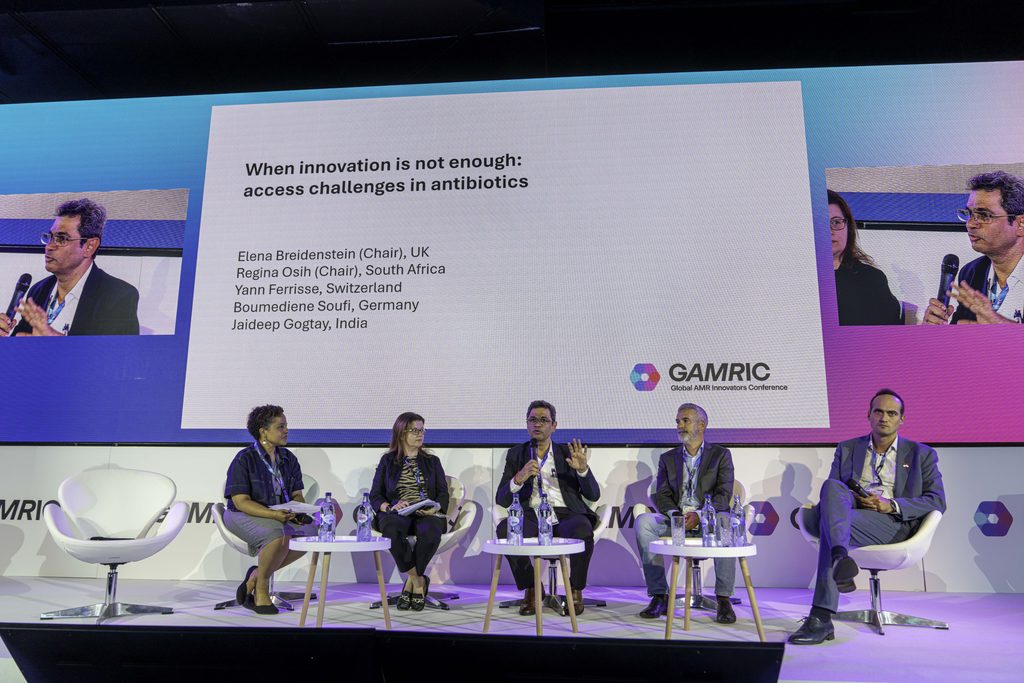
The convening power of these partnerships is exemplified by the Global AMR Innovators Conference (GAMRIC), co-organised by GARDP, ESCMID, CARB-X, LifeArc and others. The 2026 conference created a platform where researchers, clinicians, innovators, policymakers, regulators and industry could connect across the ecosystem to share insights around innovation, translation and access. This momentum will be carried forward to the next edition in September 2027 in Bengaluru, India.
Bringing the AMR community together is important, but progress also depends on sustained collaboration across disciplines. The Fleming initiative combines expertise in research, clinical practice, policy and public engagement to provide real-world evidence-based solutions for AMR. As a founding partner, LifeArc will contribute its expertise in translation, partnerships and ecosystem building to help advance practical solutions for antimicrobial stewardship with a particular focus on supporting efforts in Africa.
From ambition to action
The scale of the AMR challenge is now widely recognised. In 2024, world leaders committed to ambitious global targets through the UN Political Declaration on AMR, including reducing deaths associated with bacterial AMR and improving access to treatments and diagnostics.
Yet setting targets is only the beginning. Achieving meaningful progress will require sustained action across the innovation pathway, from supporting researchers developing new solutions, to strengthening the systems needed to deliver them effectively and equitably.
This is where partnerships matter most. Whether through supporting scientific leadership in Africa, strengthening drug discovery capabilities, advancing stewardship initiatives or convening the global AMR community, LifeArc’s contribution is focused on helping innovations with strong potential to move beyond the laboratory and into practice where impact can be achieved.
The challenge of AMR is too large for any single organisation to solve. But by working across borders, disciplines and sectors, we can help build the ecosystems needed to turn scientific progress into lasting health impact.
Media contact
Hannah Perlin
Senior Manager, PR & Media