
We are joining forces with Great Ormond Street Hospital (GOSH) on a data initiative – KidsRare – with the aim of deliveringfaster diagnoses and better treatments for children in the UK living with a rare disease.
The programme will, for the first-time, allow researchers to harness the potential of high-quality health data sets that exist across different hospitals across the UK for children and young people in the UK living with a rare disease.
Connecting data in this way makes it possible to generate insights and breakthroughs based on what health data is saying about a patient, which can support our ability to diagnose and deliver the right treatments and care, at the right time.
There is an urgent need for more to be done. There are more than 3 million people in the UK living with a rare disease, with approximately 70 per cent of rare diseases first showing symptoms in childhood. It can take years to get a diagnosis and over 90 per cent of rare diseases have no approved treatment.
“Thousands of children are diagnosed every year with a rare disease, and the vast majority currently have little hope of a treatment, let alone a cure. Key to changing this stark reality is harnessing the comprehensive data we have in our amazing NHS hospitals to turbocharge research and position the UK as a global leader in rare disease research and care. We need to act today to transform the system for the millions of people living with a rare disease.”
Sam Barrell, CEO of LifeArc
Children’s health, and therefore their data, is very different from adults’. It is less well understood, and doctors often need reliable information quickly to spot illnesses early – before they cause lifelong problems. But currently, children’s data is scattered across different hospitals and specialist centres and not easy to bring together safely.
This makes it harder for researchers to develop new treatments or make breakthroughs as fast as they could.
“Harnessing paediatric specialist data is pivotal for rare disease research. Collaboration is key to securely transform data that is locked in multiple, unconnected locations into insights that accelerates innovation and improve outcomes for children with rare disease.”
Professor Neil Sebire, Chief Research Information Officer at GOSH
Lucia’s story
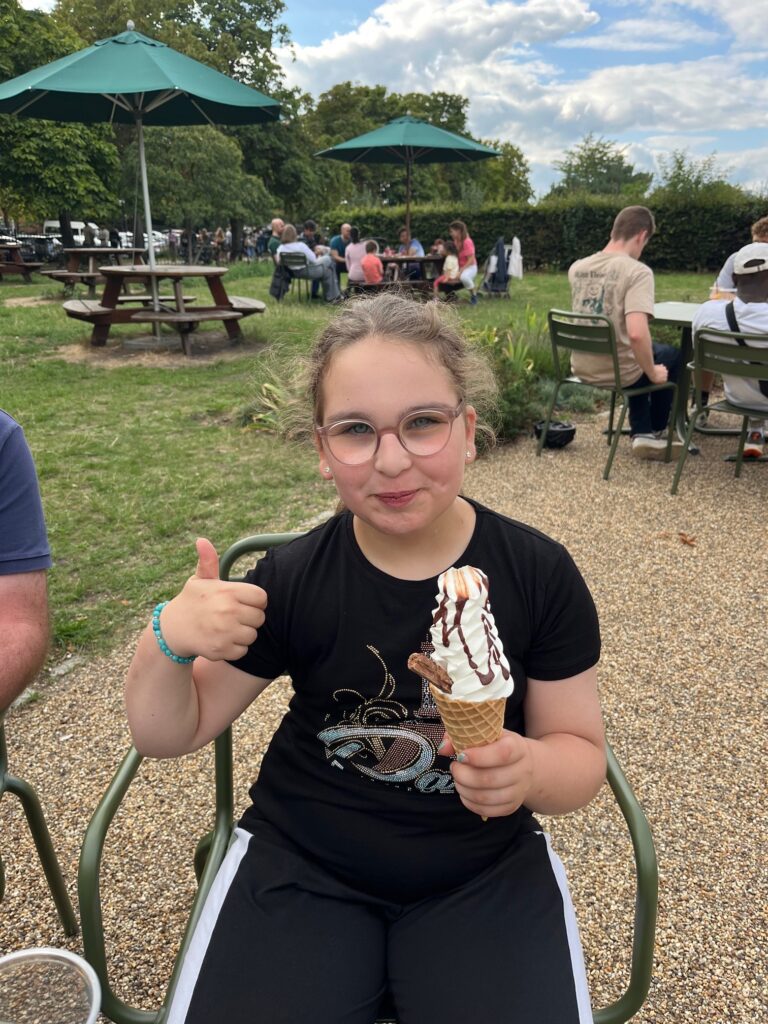
The impact of connecting data in this way is clear for Francesca whose daughter, Lucia, was diagnosed with a rare condition, Hao Fountain Syndrome. This can lead to developmental delay, speech issues and problems with vision.
“From birth, we knew that something wasn’t quite right. Lucia wasn’t weight bearing at 9 months, she had issues with her vision which meant she was very short-sighted and she wasn’t able to speak until she was 3 years old. We spoke to doctors and they said she had global developmental delay but used this term because they didn’t know the cause. This carried on for many years, and it made it hard to get the support we needed.”
It wasn’t until they were referred by a specialist to take part in the 100,000 Genomes Project run by Genomics England that they had a breakthrough.
“We had a call one day out of the blue that said that they had a diagnosis for Lucia – Hao Fountain Syndrome. They had been able to make the diagnosis because they had access to more data. Knowing the name of the condition allowed us to speak to other families about their experience, to build a community of support and prepare for the future.”
“Having this data made this possible, and we want this for more families living with a rare disease. Children need the best start in life and getting a diagnosis sooner means having more knowledge, and maybe, in the future, it could help lead to new treatments. The KidsRare initiative could really change so many lives.”
The KidsRare initiative is part of LifeArc’s new Health Data Strategy, which sets out key focus areas where data science could help speed up access to clinical trials and innovative new treatments. This includes collaborating with NHS England to unlock the potential of health data held nationally to support the delivery of rare disease trials. This was set out in LifeArc’s Rare Disease Taskforce Report – Accelerating Rare Disease R&D in the UK – which was unveiled in July 2025.
“We welcome the aims of LifeArc’s Health Data Strategy, to build upon existing secure uses of health data through secure data environments. Our Members have had the vital opportunity to feedback on LifeArc’s approach during the Strategy’s development, bringing patient voices directly to the work. We look forward to continuing to work together, as LifeArc moves to deliver patient impact through data-driven research.”
Alison Stone, Head of Programmes and Engagement at Use My Data, an independent charity focused on patient data
This initiative builds on work already undertaken by the GOSH and the Children’s Hospital Alliance through the ‘DRIVE’ (Data Research, Innovation and Virtual Environments) unit. It follows the highest standards of data security and only approved researchers can access to the anonymised health data it contains.
Read our Health Data Strategy
Media contact
Hannah Perlin
Senior Manager, PR & Media