
Motor neuron disease (MND) is one of the most complex challenges in medical research. While excellent work is taking place across the globe, no single researcher or organisation can solve it alone. Real progress depends on bringing the brightest minds together, combining expertise, sharing knowledge and tackling problems collectively.
For this reason, in 2022, we brought together the MND Association, My Name’5 Doddie Foundation and MND Scotland, joining forces with the Medical Research Council (MRC) and the National Institute for Health and Care Research (NIHR) to fund a £4.25 million investment, which would unite research institutions across the UK to help build the partnerships needed to accelerate discoveries.
The government investment was catalysed by the United 2 End MND campaign, which saw people affected by MND, researchers and MND charities successfully campaign for the UK government to commit at least £50 million of funding for MND research.
Professor Ammar Al-Chalabi at King’s College London and Professor Chris McDermott at the University of Sheffield led the programme, bringing together teams of researchers from King’s College London, University of Sheffield, University of Edinburgh, University College London, University of Liverpool and the University of Oxford to create the MND Collaborative Partnership (MCP). Its vision was to identify effective therapies for MND by coordinating researchers, clinicians, industry partners and the MND community around shared goals and resources.
People living with MND helped to shape the MCP throughout. Founding members of the patient-led United to End MND group sat on its Executive Board as voting members, a Patient Advisory Group met every month, and early-career researchers were paired with people living with MND through a ‘buddy’ scheme.
Powering the next generation of MND research
By bringing researchers and clinicians together in ways not previously seen in UK MND research, the MCP has helped create a more connected community while developing the tools and infrastructure needed to speed up discovery. The programme also helped lay the foundations for the UK MND Research Institute (UK MND RI), established in 2023 to coordinate and expand MND research nationwide.
High-quality data and biological samples are essential for advancing research. Before the MCP, sample collection was taking place across the UK, but approaches to how this was done varied widely between hospitals. The MCP standardised sample collection across five clinical sites, creating a stronger resource for biomarker research. Since 2024, 227 people with MND have now contributed samples in this way, while a new home-sampling approach has enabled participants to provide blood and urine samples without visiting hospital.
The MCP has developed a range of research tools to support future advances. These include:
- patient-reported outcome measures capturing symptoms, disability and quality of life
- a new app: Join MND Research, with 120 users contributing more than 3,000 measurements
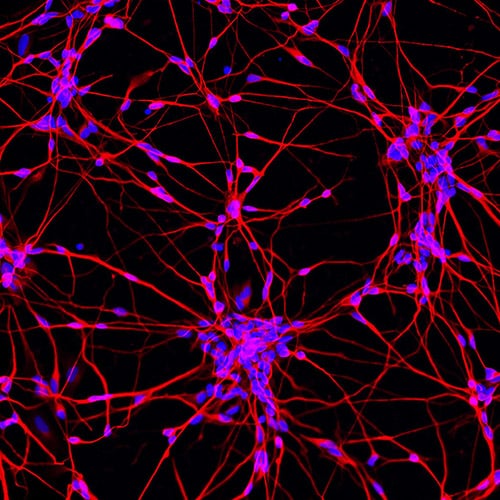
- standardised isogenic iPSC cell lines (motor neurons grown in a dish, derived from a standard stem cell line in which alterations are introduced to one gene at a time) that are crucial for testing potential treatments in a reproducible way. A shared drug screening platform which has screened over 500 potential drug compounds and identified 32 candidates that warrant further study.
The MCP has also secured an additional £11 million of funding for a unique drug testing platform for people living with MND, EXPERTS-ALS, where treatments can be trialled in people around six times faster than conventional trials and without the need for a placebo group.
Finally, to develop new treatments for MND, it is essential that we have good collaboration between academia and industry. The MCP has worked to strengthen links with industrial partners through the development of an industry forum involving experts from 8 organisations in partnership with the Medicines Discovery Catapult.
The future of MND research
Three years after its inception, the MCP leaves a lasting legacy of stronger infrastructure, collaborative networks and shared resources for MND research across the UK. By improving collaboration, access to data and samples, research tools and involvement of people living with MND, it has created a stronger foundation for future advances. Today, the UK MND RI continues to build on the groundwork laid by the MCP, ensuring that the benefits of this collaboration continue long into the future.
Media contact
Hannah Perlin
Senior Manager, PR & Media