International Women’s Day 2026 is framed by a clear call from the United Nations: Rights. Justice. Action. For ALL Women and Girls.
It’s a reminder that while progress has been made, structural barriers – in law, culture and opportunity – still shape women’s experiences at work and beyond. Alongside this, the global ‘Give to Gain’ campaign emphasises the power of generosity and support, recognising that when we invest in women, we all benefit.
To mark International Women’s Day this year, we asked women at different stages of their careers at LifeArc to reflect on their own experience of giving and receiving this support. Together, their stories show the power of investing in one another with time, trust and support.
Building confidence through early-career support
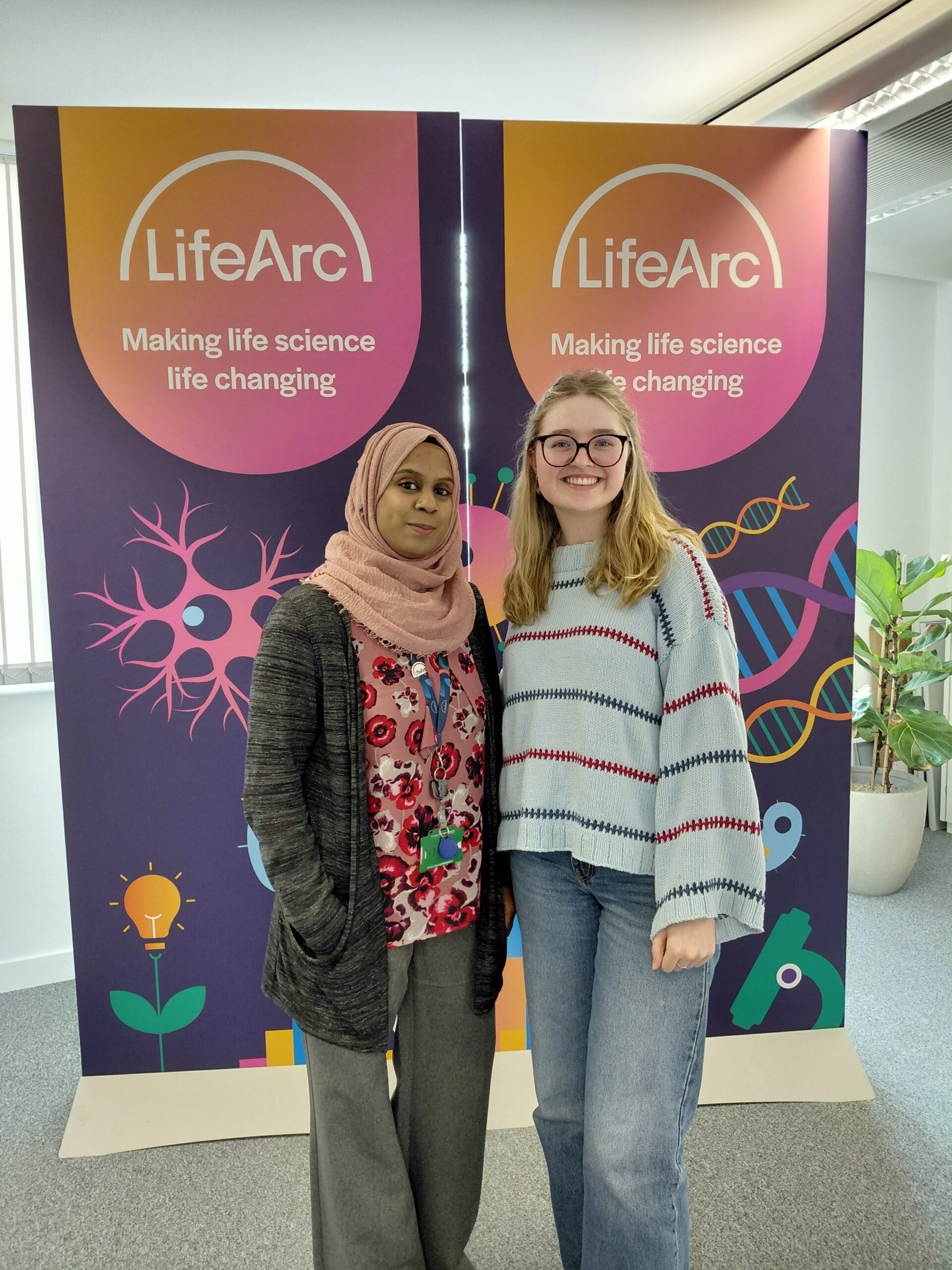
For Zaynab Isseljee, supporting women has often meant investing in early talent, making a concerted effort to dedicate time to mentorship
“Over the years, I have supervised several industrial placement students at LifeArc, one outstanding student was Juliet. Being her supervisor for the one-year placement meant I provided line management, mentoring and training both in and out of the lab, which also gave me the opportunity to strengthen my own leadership skills.”
Through regular mentoring, encouragement and practical opportunities, Zaynab focused on building confidence as much as technical ability, nominating Juliet for presentations, inviting her into project meetings and ensuring her work was visible.
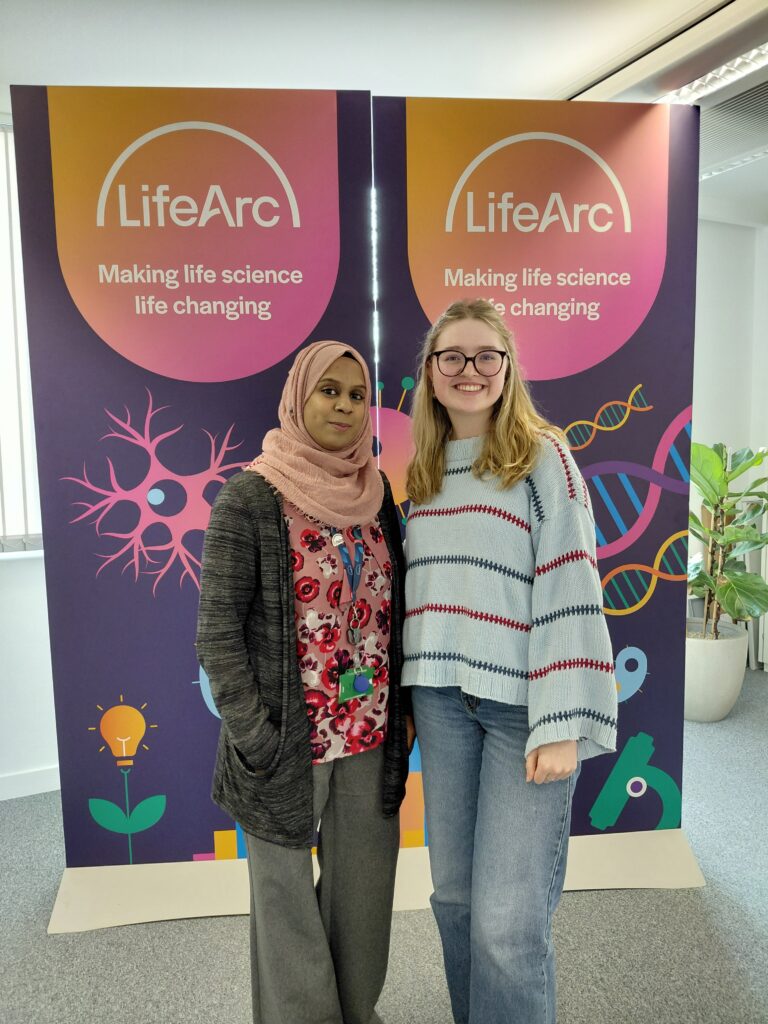
“This was a significant step for an IP student – presenting to the wider organisation – and it played an important role in building her confidence. Seeing Juliet complete a successful IP year and now return to LifeArc as part of the Events team – where she continues to thrive – is something I’m genuinely proud of. Watching her grow during her placement and now contribute so confidently within the wider LifeArc community feels like a real reflection of the impact of our early-talent programme and the supportive culture we strive to build.”
Zaynab is also clear about challenging a common misconception: that helping others is a distraction from ‘real’ work.
“Helping others is sometimes viewed as time‑consuming, which can discourage people from offering support. However, investing time and effort in colleagues, especially early talent, is genuinely rewarding. Seeing how much individuals grow both as scientists and people over the course of a year demonstrates the real value of that investment.”
Crucially, she approaches support through an inclusive lens, recognising that women’s experiences are shaped by many intersecting factors.
“Creating space for open and honest conversations helps me tailor the type of support each person needs, rather than assuming a one‑size‑fits‑all approach. By practising this awareness throughout the year – not just during key moments – I can help foster a more inclusive and supportive environment for all women I work with.”
Being supported to find your voice and discover your strengths
From the other side of that relationship, Juliet Colledge reflects on what it means to be supported early in your career and how powerful it is to feel both encouraged and safe to make mistakes.
“As an inexperienced, and frankly very nervous, placement student arriving into a professional environment for the first time, Zaynab walked the line perfectly between encouraging me to try new things and increase my independence, while also reassuring me that it was ok to ask for help and make mistakes.”
That balance helped Juliet overcome mental barriers many women recognise, especially around confidence and speaking up.
“I don’t think it’s an uncommon observation that women tend to speak more apologetically, with a level of doubt or a caveat baked in. This isn’t an easy habit to undo. Having someone like Zaynab, who always encouraged me to ask questions and get involved in meetings really helped me progress in this goal, but it continues to be something I’m working on today.”
Visibility and sponsorship played a key role too. Opportunities to present, attend conferences and showcase work were real confidence builders.
“These were both wonderful personal development opportunities I might not have been aware were open to me otherwise.”
Juliet’s journey also highlights how support doesn’t stop at one organisation or one stage. Later mentors helped her reassess her career path, identify strengths and challenge limiting assumptions, including who ‘should’ apply for roles.
“In a mentorship programme, my mentor from a well-known breast cancer charity encouraged me to adopt the mindset of ‘why would I take a job where I already know how to do all of it!’”
Now, as she progresses in her career, Juliet sees mentorship not just as something she received — but something she hopes to pass on.
“I really hope to apply the knowledge, skills and connections I gain through experience and the mentorship of others to be the kind of mentor that other women have been for me.”
The importance of representation and paying it forward
When Ylenia Giarratano started her career, she really noticed the absence of many women.
“When I began my undergraduate degree in mathematics, very few women were enrolled. Later, when I started my PhD, I was the only woman in my research group.”
Over time, that imbalance began to shift as more women joined. The changes were huge, not just in the number of women around her but how collaboration was fostered.
“I remember how the atmosphere shifted as this happened. Collaboration grew stronger, conversations became more open, and a genuine sense of community emerged. That experience showed me how powerful inclusion and representation can be, not only in shaping opportunities but also in transforming how we work together.”
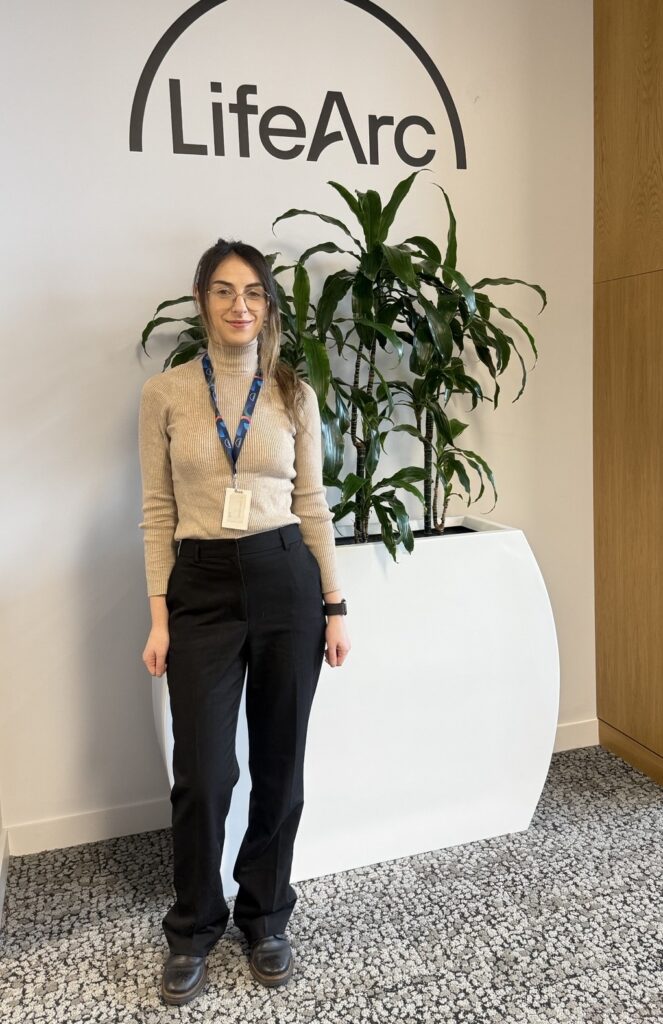
More recently, Ylenia saw that impact play out through mentoring at LifeArc, supporting an intern as part of the HDR UK Black Internship Programme. While highly capable, her mentee was unsure about whether academia or industry was the right path.
“Through regular conversations, sharing my own experiences, and supporting her throughout the internship, I tried to make those possibilities feel more accessible and less intimidating.”
By the end of the placement, the shift was clear.
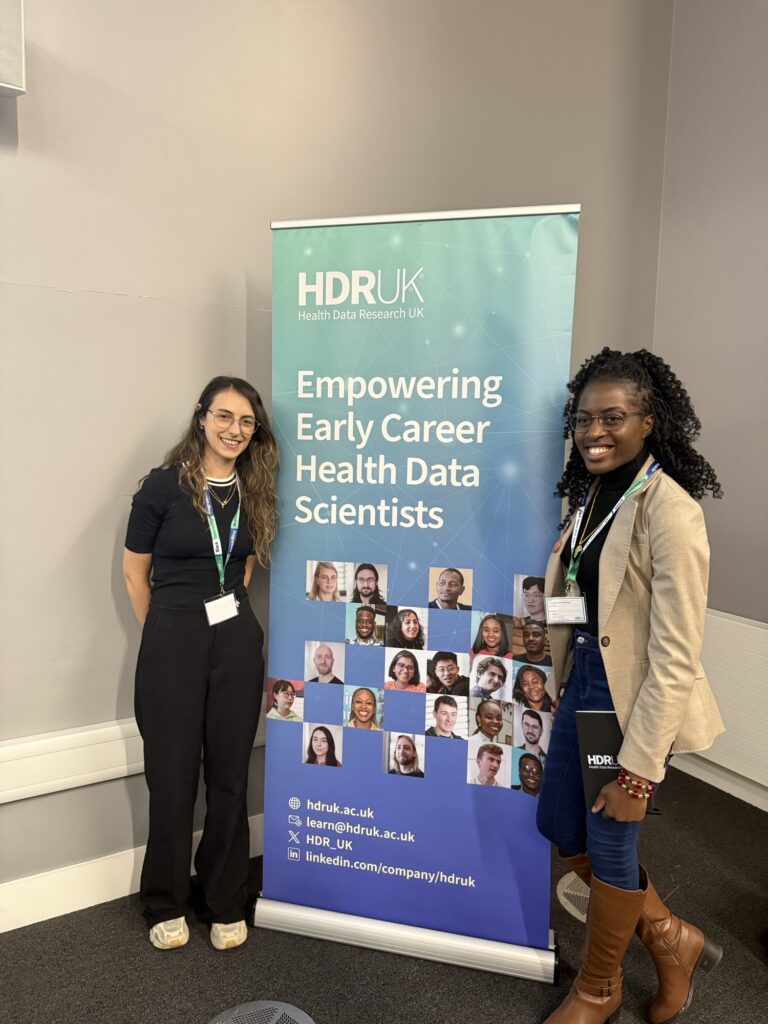
“Her confidence had grown noticeably, and she began to see that she could make a meaningful impact regardless of the path she chose. Witnessing her development and hearing how supported she felt was incredibly rewarding for me as well.”
In her day-to-day work, Ylenia focuses on ensuring women’s contributions are recognised and amplified, particularly in collaborative discussions.
“Many women invested in me throughout my career by offering guidance, encouragement and opportunities at key moments. Supporting others is my way of paying that forward. When we choose to lift each other up, the impact goes far beyond one individual and helps strengthen the entire community.”
Recognising progress so far and the power of mentorship
Looking back at her studies and career so far, Doireann Gordon realises that not experiencing gender-based bias as a defining feature of her journey is significant.
“The top students were women, the best lecturers were women, and I never felt like I was a pioneering woman who had to constantly prove herself.”
She credits the women who came before her for creating environments where talent, not gender, defined success.
“I want to say thank you to the women in science who have come before me to pave the way for not only my generation, but the generations to come; it’s a truly incredible feat.”
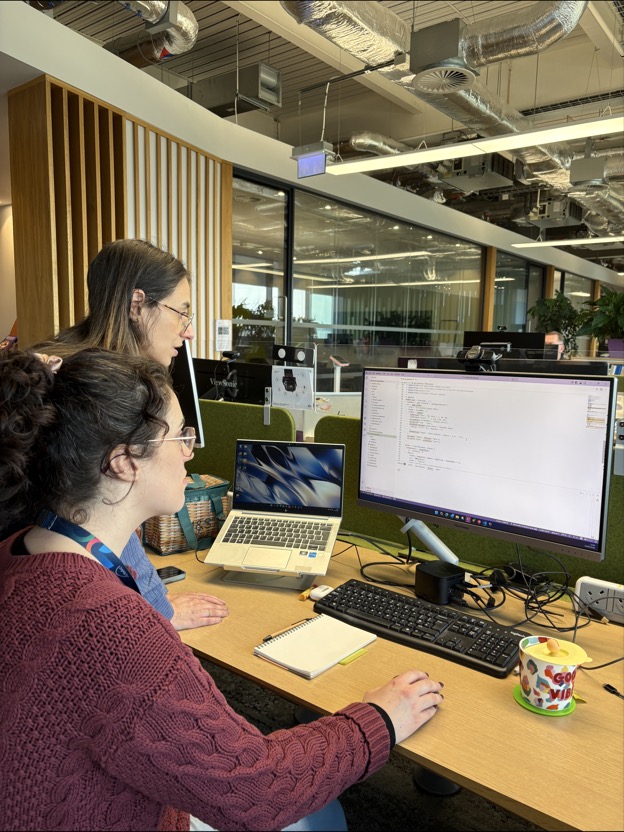
Her career path has also been shaped by acts of sponsorship, particularly when a potential supervisor, despite lacking funding, actively advocated for her future.
“She made sure that she connected me to everyone in the department she knew was on the lookout for a PhD student. She introduced me to my future PhD supervisor, and importantly, made a very strong case for me! Without her, I don’t think any of my life would have worked out the way it has.”
During her PhD, informal mentoring filled gaps that formal structures sometimes miss.
“I worked with an incredible young woman who was just a PhD student herself, but she was so innovative and brilliant that I thought she was a principal investigator for a whole year!
My official supervisors were all men, but she took the time to mentor all of us younger women and ran a Friday afternoon ‘help, the science isn’t working’ support group to help us figure things out.”
These moments – introductions made, confidence built, formal and informal mentorship – play a huge part in shaping careers.
Building a culture of support for women at LifeArc
At LifeArc, we’re committed to creating an environment where women can thrive, grow, and lead.
Our mentoring programme connects women with experienced colleagues who can offer guidance, career insight, and support at key stages in their development. The programme is also open to male colleagues who wish to participate.
We offer specialist maternity coaching for colleagues preparing to take leave and for those returning, helping them navigate this important life transition with confidence and tailored support. We also provide enhanced support for carers – a group statistically more likely to include women – and our Parents & Carers Network offers a safe, collaborative space to share experiences, access resources, and help shape policies that reflect modern family life.
Recently, we strengthened our paternity support by introducing six weeks of paid co‑parent leave for new fathers and non‑birth parents. This supports greater flexibility for families and enables all parents to maintain and progress their careers while growing their families.
We also have a dedicated menopause support network for colleagues experiencing peri‑menopause or menopause, along with access to specialist support through Peppy.
Together, these actions form part of our broader ambition to create a workplace where everyone feels empowered to reach their full potential – on International Women’s Day and throughout their careers with us.